Oct 28, 2026
Best Turmeric Root Extract Powder for Functional Food Formulations
If you are sourcing turmeric root extract powder for joint health supplements, functional beverages, or fortified food products, the quality gap between suppliers is wider than most buyers expect. Le-Nutra’s turmeric root extract powder is standardized to ≥95% curcuminoids (CAS 458-37-7) extracted from authenticated Curcuma longa L. roots using Class 3 low-toxicity solvents with per-batch lead data (Pb ≤1 mg/kg) with complete HPLC measurement of all three curcuminoid fractions. This tutorial talks you through the difference between a procurement-ready ingredient and one that gets stuck at quality review.

Understanding Turmeric Root Extract Powder for Functional Foods
What Makes It Different from Raw Turmeric Powder?
The curcuminoids comprise only 2-5% of raw turmeric root. It is also rich in fiber, essential oils and carbohydrates. Once the solvents are evaporated and the powder is cleansed, the physiologically active phenolic compounds in turmeric root are concentrated to around 95%. This is vital in the manufacture of functional meals since the therapeutic quantity, label space and capsule fill weight all rely on having the correct amount of active material per gram.
The Three Active Curcuminoid Fractions
Curcumin, demethoxycurcumin, and bisdemethoxycurcumin are the three known compounds that are present in a properly standardized extract. Each part helps to stop the NF-κB and COX-2 processes, which lowers the amounts of IL-6 and TNF-α, which are pro-inflammatory cytokines. Suppliers who only report "total curcuminoids" without giving information on each fraction makes it impossible for formulators and quality teams to be sure that each batch will have the same biological properties.
Why Solvent Class Determines Market Access?
Outside groups that looked at goods on the U.S. market found that a lot of the curcumin extracts are made with Class 1 or Class 2 harmful solvents. Le Nutra only uses Class 3 low-toxicity solvents, and 5,000 mg/kg of solvent waste is made by each batch. People who shop in places controlled by the FDA must have this paperwork; it's a quality rule.
How to Choose the Best Turmeric Root Extract Powder for Your Applications
Purity, Particle Size, and Flowability
The size of the particles affects both how well the powder moves and how well it packs down when supplement makers make pills or capsules. About 90% of the time, Le-Nutra's turmeric root powder goes through 80 mesh. This helps mix the powder evenly and stops it from capping when it's pressed quickly. There are tests that show that at least 95% of the active ingredient is curcuminoids. This data should be in the table of product details, not buried in the text.
Regulatory Documentation Checklist
To ensure they are receiving the best curcuminoid, procurement teams should always request a Certificate of Analysis (COA) with lead data for each batch, a report on Total Solvent Residue with solvent class data, HPLC quantification of all three curcuminoid fractions separately, and a complete heavy metals panel (Pb, As, Cd, Hg). If you don’t have any of these things, you’re going to be tossed out at most phases in the quality review process.
Organic and GMP Certification Alignment
GMP approval under FDA 21 CFR Part 111 and ISO 22000 is the benchmark for process control. Also, if you wish to sell in the EU, make sure that your supplier’s documentation is compliant with the EFSA’s ADI of 3 mg/kg body weight per day. For an adult weighing 70 kg, that’s 210 mg a day. Regulations in Canada and Australia now mandate more review processes for forms with enhanced absorption such as liposomal delivery or piperine co-formulation and they should be included into label development timeframes.
Benefits and Usage Guidelines for Turmeric Root Extract Powder in Functional Foods
Validated Health Mechanisms
Researchers have found that taking 500 mg to 1,000 mg of curcumin every day can cut down on joint pain by about 30%. An antioxidant works in two ways: it gets rid of DPPH• and ABTS•⁺ free radicals directly and raises the levels of glutathione peroxidase (GSH-Px) and superoxide dismutase (SOD). A chemical called brain-derived neurotrophic factor (BDNF) is also changed by curcumin when it goes into the brain from the blood. The changes this makes to BDNF help with memory and focus. You can find this in more and more brain health goods.

Dosage Considerations and Regulatory Context
There are a lot of commercial goods that dose above the EFSA's ADI level. This is important for people who want to make their own supplements for joint health. Because of the use of food additives, the ADI is a conservative standard. However, supplement companies that want to sell in the EU or UK should be very clear about why they use the doses they do. A group in the UK called the Committee on Toxicity said in December 2024 that there is "reasonable evidence" that taking supplements high in curcumin can cause problems with the liver. This makes it even more important to be careful about where the dose is placed and how the label is written.
Bioavailability Enhancement Options
Turmeric root extract powder that you buy in stores doesn't mix well with water because it is lipophilic. In guts that are mostly water, this makes it harder to absorb. When you mix 20 parts curcumin to 1 part piperine, the glucuronidation process stops, making the curcumin 20 times more bioavailable. One way for formulators to improve uptake without adding alkaloids is to use liposome encapsulation. Both ways are fine with Le-Nutra's research and development team, who can give bioavailability data that is specific to each use case.
Top Considerations When Procuring Turmeric Root Extract Powder in Bulk
Lead Contamination: The Category's Highest-Risk Issue
The business world has found that about 14% of turmeric samples from South Asian supply lines have more than 2 εg/g of lead. Most of the time, this is because lead chromate is added to make the color better. Not only is this a possible risk, but it has already caused companies to return their goods and the government to take action. To keep this under control, Le-Nutra only buys ingredients from farms that have been checked out. They also test the raw materials before they are used and use an ICP-MS machine with a limit of ≤1 mg/kg to tell how much lead is in each batch.
Supplier Qualification Process
When you first buy curcuminoids, you should buy them in bulk every six to twelve months. Then, you should buy them again every year. The usual steps are to pre-screen providers (with a facility check or video proof), ask for samples to be tested by a third party for 8–16 weeks, place a small trial order, and then negotiate a new framework agreement every year. The fact that Le-Nutra delivers 98% of the time and keeps enough safety stock on hand for 30 days makes sure that this process runs smoothly and there are no supply breaks.
Authenticity: Detecting Synthetic Curcumin
It is possible for synthetic curcumin made from petrochemicals to have HPLC profiles that look a lot like those of natural extracts. The only way to be sure that they are different is to use a radiocarbon (C14) date. It lets you know if the carbon source is new plants. People who need to make strict label claims about "natural origin" should ask the company that sells them turmeric root extract powder for C14 analysis data as part of the approval package.
Comparing Organic vs. Regular Turmeric Root Extract Powder and Curcumin Extract Alternatives
Organic vs. Conventional: What the Difference Means in Practice
Organic Turmeric root extract powder comes from farms that have been checked to make sure they don't use any pesticides. This makes it less likely that pesticide residue will be found during multi-contaminant screening. Getting an organic certification adds more paperwork for brands that want to be seen as clean-label in North American stores. This helps with both marketing and meeting shop standards. Le-Nutra has both organic and standard types that are allowed, and they both have the same amount of active ingredients.
Extract Powder vs. Concentrated Curcumin Isolates
Some formulators like a 4:1 preparation because it keeps more of the phytochemical makeup of the whole root. It's because it's more like nature. It is possible to find a curcuma longa extract that works at least 95% of the time in the smallest tablet or pill. For uses in food and drinks where taste is important, grades with less concentration may not have as much of the earthy, slightly bitter taste that you can taste at higher loading levels.
Powder vs. Other Delivery Forms
The most flexible option for formulators is turmeric root extract powder, which may be included into bar and snack matrixes, combined with sachets, encapsulated or compressed into tablets. Capsules are simple, since you can purchase them already made, but you can’t adjust the dosage or combine them with elements that work well together. Fresh root varieties and golden paste are utilized in home kitchens. They have nothing to do with the production of valuable foods on a large scale for sale.
Conclusion
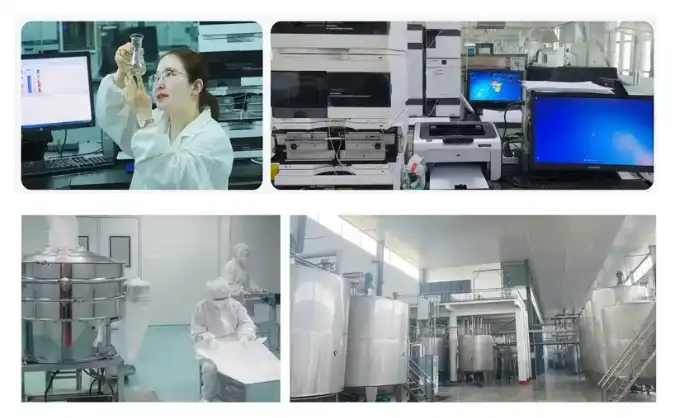
Turmeric root extract powder is one of the most popular plant-based products in the joint health and functional food market. It is also one of the most carefully checked products for contamination, solvent safety, and authenticity. You can speed up the approval process for purchases by picking a provider that gives you per-batch lead data, Class 3 solvent paperwork, the ability to measure each curcuminoid fraction, and clear regulations. Le-Nutra's GMP-certified, 60,000 m² plant can do just that. It has a 3,000-tonne annual capacity, 14 years of experience with extraction, and a factory-direct supply model.
FAQ
1. How do you confirm lead levels are safe in every batch?
Every production batch undergoes ICP-MS heavy metal testing in our in-house laboratory, with results confirmed against a Pb ≤1 mg/kg limit. We provide per-batch COA with full heavy metal panels (Pb, As, Cd, Hg) as standard shipping documentation — not on request.
2. What solvents are used in your extraction process?
We use Class 3 low-toxicity solvents exclusively, with total solvent residue confirmed at ≤5,000 mg/kg per batch by GC-MS analysis. This specification complies with FDA and ICH Q3C guidelines and is documented in every shipment's Technical Data Sheet.
3. Can you provide individual curcuminoid fraction data?
Yes. HPLC analysis reports curcumin, demethoxycurcumin, and bisdemethoxycurcumin individually for each batch. This data is included in the standard COA and is available prior to order placement upon sample request.
4. What is the minimum order quantity for samples and bulk orders?
Samples are available for formulation testing and third-party analytical verification. Bulk orders start at 25 kg, packaged in fiber drums with double-layer food-grade polyethylene liners. Custom packaging configurations are available for larger volumes.
5. How do you handle bioavailability enhancement requests?
Our R&D team supports piperine co-formulation and liposomal encapsulation development. We can provide application-specific absorption data and assist with regulatory documentation for markets where bioavailability-enhanced formats require additional review, including Canada and Australia.
Partner with Le-Nutra for Verified Turmeric Root Extract Powder Supply
Le-Nutra supplies pharmaceutical-grade turmeric root extract powder from a GMP-certified, FDA-registered facility with full per-batch safety documentation — the exact package procurement teams need to pass quality review without delays. As a direct turmeric root extract powder manufacturer with 14 years of extraction experience, we support sample requests, OEM/ODM specifications, and annual supply frameworks. Send your technical requirements or request a sample directly to enquiry@lenutra.com or visit lenutrabio.com to review full specifications.
References
1. Hewlings, S. J., & Kalman, D. S. (2017). Curcumin: A review of its effects on human health. Foods, 6(10), 92.
2. European Food Safety Authority (EFSA). (2014). Scientific opinion on the re-evaluation of curcumin (E 100) as a food additive. EFSA Journal, 12(9), 3769.
3. Prasad, S., Gupta, S. C., Tyagi, A. K., & Aggarwal, B. B. (2014). Curcumin, a component of golden spice: from bedside to bench and back. Biotechnology Advances, 32(6), 1053–1064.
4. Anand, P., Kunnumakkara, A. B., Newman, R. A., & Aggarwal, B. B. (2007). Bioavailability of curcumin: Problems and promises. Molecular Pharmaceutics, 4(6), 807–818.
5. Shoba, G., Joy, D., Joseph, T., Majeed, M., Rajendran, R., & Srinivas, P. S. (1998). Influence of piperine on the pharmacokinetics of curcumin in animals and human volunteers. Planta Medica, 64(4), 353–356.
6. Goel, A., Kunnumakkara, A. B., & Aggarwal, B. B. (2008). Curcumin as "Curecumin": From kitchen to clinic. Biochemical Pharmacology, 75(4), 787–809.
Online Message
YOU MAY LIKE
High-quality Botanical Extracts, Functional Ingredients, And Nutraceutical Raw Materials Manufacturer And Supplier