Oct 27, 2026
Frankincense: The health benefits of the Boswellia extract
Frankincense has been used in traditional medicine for thousands of years, and modern science is beginning to confirm what ancient healers already knew. At the center of this interest is boswellia extract powder — a standardized, concentrated form of the active compounds found in Boswellia resin. Whether you are formulating joint health supplements, pet nutrition products, or functional skincare, understanding what this ingredient actually delivers — and how to source it correctly — matters more than most buyers realize.

Understanding Boswellia Extract Powder and Its Health Benefits
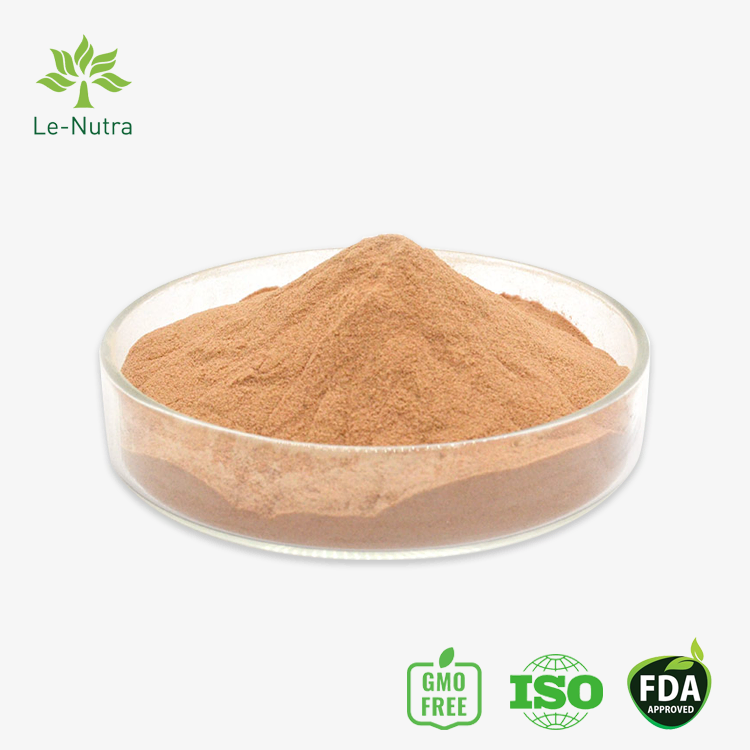
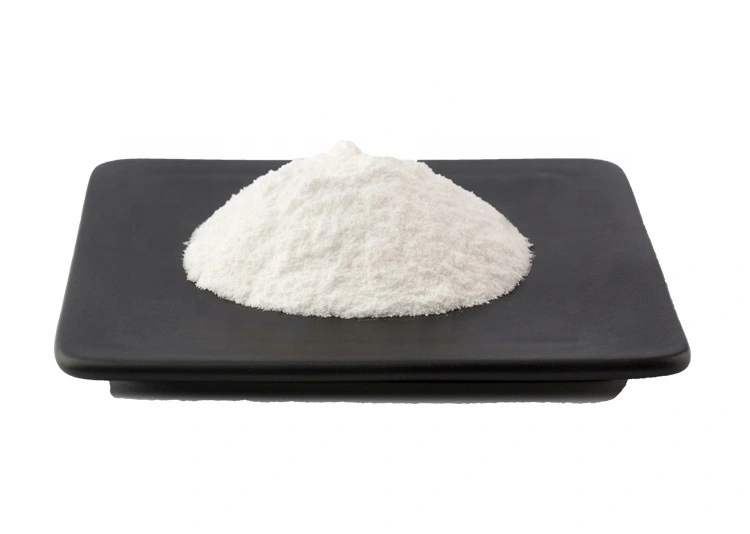
Boswellia resin comes from trees in the genus Boswellia. Boswellia carterii and Boswellia serrata are the most important types for business. You don't get the raw resin that's in your capsule or cream, though. In order to get the same amount of pentacyclic triterpenes, especially KBA (11-keto-beta-boswellic acid) and AKBA (3-O-acetyl-11-keto-beta-boswellic acid), the resin needs to be turned into a normal boswellia extract powder.
Why Standardization Matters More Than You Think
A lot of research has been done on it, and it holds the 5-lipoxygenase (5-LOX) enzyme in check. This enzyme is what makes leukotrienes in the inflammatory pathway. There is a chance that a piece of raw resin with 65% boswellic acid could also have 2% to 3% AKBA. When "total boswellic acids" and "real AKBA amount" are different, it can be hard to check the label. HPLC analysis can solve this problem because it can separate and measure KBA and AKBA separately. This gives you numbers that someone else can check.
Primary Health Applications
Backs up the idea that boswellic acid can help with joint pain, especially in people who have osteoarthritis in their knees. According to scientific data, when you take 100 mg to 250 mg of AKBA-rich extract every day, your stiffness goes down and your movement gets better. As an added bonus, this ingredient can help with a lot of different kinds of goods because it can reduce pain in a number of areas, not just the joints.
Dosage Guidance and Safety Considerations
Different levels of standards vary on how much medicine is in dietary pills, but most have between 300 mg and 1,000 mg per dose. Boswellia may make the uterus work harder, so people who are pregnant or nursing should stay away from it. As well, the extract can stop some cytochrome P450 enzymes in the liver from doing their job. This might make the effects of drugs that are given at the same time stronger. Formulators who are responsible for their products list these real safety concerns in their documentation. Any reputable supplier should bring them up right away.

Comparing Boswellia Extract Powder with Other Natural Supplements
A lot of brands that make products to help joints use turmeric (curcumin), glucosamine, or type II collagen with boswellia serrata extract. When procurement teams know how these parts fit together and where they each add value, they can make recipes that are stronger and better protected.
Boswellia vs. Turmeric: Different Mechanisms, Complementary Effects
It is curcumin in turmeric that stops the NF-κB and COX-2 pathways. Boswellic acids, on the other hand, mostly do their job by stopping 5-LOX. These molecular targets are not at all the same. In medicine, they are often used together because they don't have too many effects that are similar. When you mix two active ingredients into one recipe, it's important to test for stability. It saves your R&D team weeks of work to find a supplier who can give you data on how well the two active ingredients work together.
Powder vs. Encapsulated Forms
If a company uses boswellia extract powder, they can do more things. It can be mixed with other things and put on the skin as a gel, pill, tablet, or hard-shell pill. With pre-encapsulated formats, you can't dose as many times, and they don't always come with the same paperwork that bulk powder suppliers do that lets you track them. While receiving inspection, powder format lets you keep a closer eye on quality when you buy in bulk from other companies. This is because you test the raw material, not just the finished form.
Quality Certification as a Selection Filter
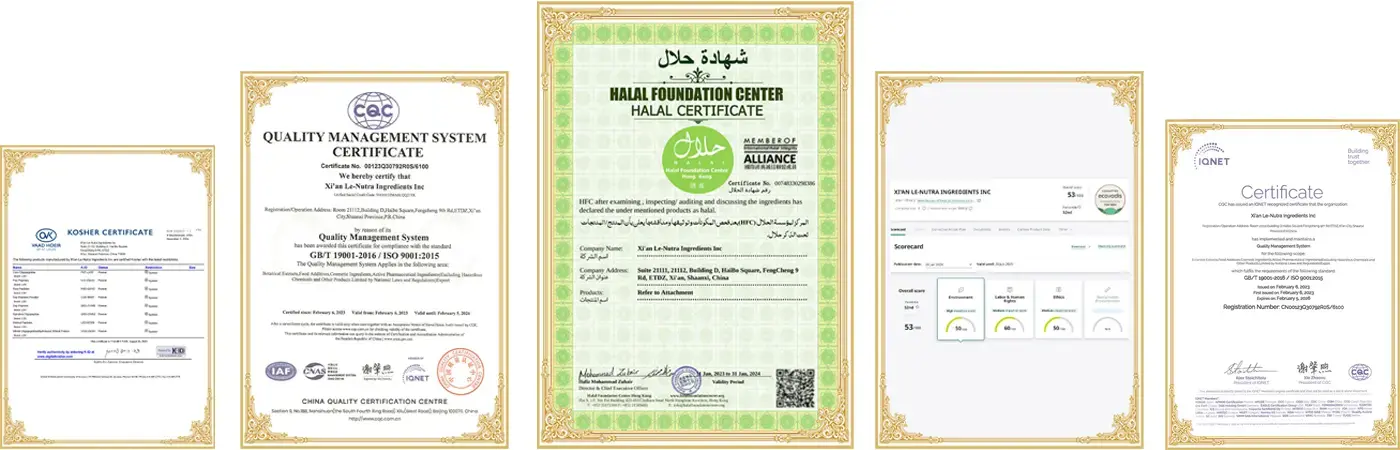
It's not just a mark on a product that it's organic, ISO 9001, GMP compliant, or kosher; these are process standards that can be checked. If someone wants to buy something from another country, they need to have GMP certification under 21 CFR Part 111 (U.S.) or something similar. If a seller has these licenses and can show proof of COA, TDS, and MSDS when asked, the qualification process goes much more quickly.
How to Choose the Best Boswellia Extract Powder for Your Business
What is the most important science question you should ask a provider? Do you report KBA and AKBA separately by HPLC? If so, could you describe the chromatographic method? If they say, "We report total boswellic acids by titration," you know they're good enough to go through your quality control check.
Key Technical Criteria for Supplier Evaluation
Here are the main things that make a good boswellia extract powder maker different from a regular resin processor:
- HPLC-verified active content: KBA and AKBA reported separately, with method reference and chromatographic conditions available on request. Titration-only suppliers cannot meet label verification requirements for regulated markets.
- Solvent residue compliance: Ethanol or ethyl acetate extraction is the accepted standard. Both solvents preserve the full boswellic acid spectrum and remain within pharmacopeial residue limits. Avoid suppliers who cannot identify the solvents used in their process.
- Flowability solutions for production: Resinous powders are naturally sticky. A supplier who proactively offers silicon dioxide as a flow agent — matched to your encapsulation line speed — is solving a real manufacturing problem before it becomes a downtime event.
- Heavy metals and microbial five-panel: ≤10 ppm total heavy metals, total plate count ≤1,000 cfu/g, yeast and mold ≤100 cfu/g, E. coli negative, Salmonella negative. These are non-negotiable thresholds for any supplement application.
- Water-dispersible or complexed grades: Native boswellic acids are lipophilic. For water-based systems, cyclodextrin inclusion complexes, liposomal preparations, or lecithin-based emulsification are the established approaches. A supplier with these options on-hand shortens your formulation timeline.
Price vs. Specification: Where Buyers Go Wrong
A 65% boswellic acid extract can have as little as 2% AKBA if you price it by titration. It costs more per kilogram to get an HPLC-verified 65% standard with AKBA measurements of 5% to 8%, but it's worth it if your product needs to be retested at the shop or by the government. The math is very different when you use cost-per-active-dose instead of cost-per-kilogram.
Procurement Guide: Sourcing Boswellia Extract Powder in Bulk
There are usually six steps for industrial buyers: technical questions, sample request, independent re-testing (4–8 weeks), validation of tablet or pill filling, trial order, and yearly volume agreement. A record of each step is made to make sure that your formula is safe after it is locked.
Documentation Standards to Request
Ask a supplier for a Certificate of Analysis (COA) with HPLC data that is specific to the batch, a Technical Data Sheet (TDS), a Material Safety Data Sheet (MSDS), and heavy metal and microbial test reports from a third party before you trust them. For goods sold in the US, the supplier must follow 21 CFR Part 111 cGMP. For EU dietary supplement applications, each product's Novel Food status needs to be compared to the 1997 usage level. It's not enough to just say that the products follow the rules.
Logistics and MOQ Flexibility
Most bulk orders are packed in 25 kg fiber drums that are lined with two layers of food-grade polyethylene. This keeps the powders from absorbing water and turning brown, which are two big problems for resinous powders. Different delivery terms, like EXW, FOB, CFR, CIF, DAP, and DDP, let procurement teams figure out landed costs based on where the goods are being sent. You can use a credit card, Bitcoin, Western Union, or T/T to pay. People who plan to buy for a long time can get credit terms.
Building a Long-Term Supply Relationship
It is very expensive and takes a long time to switch ingredients after a boswellia recipe has been locked down and mass production has begun. It is more important to choose the first seller in this case than in groups of commodity items. Give more weight to suppliers who keep an extra 30 days' worth of stock, can track batches back to the source resin, and can change the formula when asked without having to go through the whole re-qualification process all over again.
Real-World Applications and Market Positioning
In North America, the main reason that boswellia products are still sold is to help with joint health. In the musculoskeletal area, goods that mix Boswellia with type II collagen and turmeric are one of the fastest-growing groups. This is because people want choices that come from plants and don't have NSAIDs in them.
OEM and Private Label Opportunities
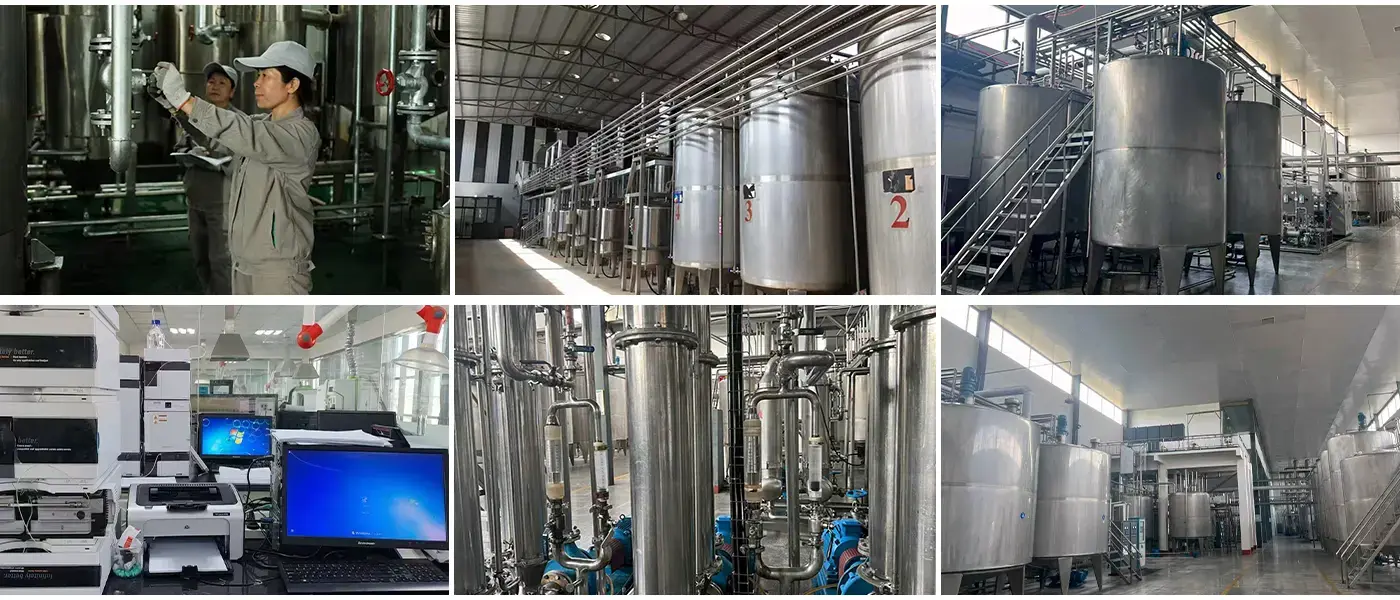
A brand can get a new product on the market faster if they use OEM manufacturing with a company that takes care of extracting raw materials, standardizing them, and making finished dosage forms all under one GMP-certified roof. At the raw material stage, you can choose the particle size, the amount of boswellic acid (65%, 75%, 85%, or 95%), and the flow agent that will be added. So, the specs for your finished product are already there from the beginning.
Skincare Applications for Boswellic Acids
Because they reduce inflammation and protect against free radicals, boswellic acids are useful in skin care products for sensitive skin, reducing sebum, and dealing with the changes that come with getting older. Food-grade materials don't have to follow as many rules about color and smell as cosmetic-grade materials do. There are decolorized and low-odor types that can be used in places where the natural resin smell would mess up a fragrance system. For this route, you need INCI paperwork as well as certificates for heavy metals and germs that are safe for use in cosmetics. You should ask for these documents separately from documents that are safe for food.
Pet Nutrition: A Regulated Growth Channel
In Europe, there are clear rules about how Boswellia can be used in pet goods. The EU Implementing Regulation (EU) 2022/1383 lets Boswellia serrata extract be added to horse and dog food. It fits into the groups of a taste additive and a flavoring substance. Formulators of animal nutrition now have the proof they need. If brands use an ingredient meant for people without this legal support, they could be breaking the rules, which is something most brands want to avoid.
Conclusion
Boswellia serrata extract powder is a well-known botanical ingredient that has been used by researchers for decades. It can help with joint health, inflammation control, and more and more applications in skin care and pet feeding. It works as long as it is found in a way that makes sure it has the right amount of the active ingredients. An ingredient that can be used in business is different from one that doesn't pass your quality control check at the door. It should have KBA and AKBA content that has been confirmed by HPLC, clean solvent residue profiles, pharmaceutical-grade bacteria and heavy metal standards, and flowability that is ready for production. Making choices in this type of procurement will change how things are made for a long time. Making sure the specs are right from the start is the most cost-effective part of making a product all together.
FAQ
1. What is the difference between titration and HPLC for boswellic acid testing?
Titration figures out how many organic acids are in a sample as a whole. Some of the chemicals in these acids have not been shown to reduce inflammation. This method gives real strength numbers that are too high a lot of the time. HPLC sorts the various boswellic acids, such as KBA and AKBA, into groups and checks the amounts of each group against standards. There is only one way to get numbers that can be tested over and over again. These numbers can also be used to back up claims on the labels of joint health products that are based on specific active ingredients.
2. Why does "65% boswellic acid" sometimes show different AKBA levels?
If the test results say that there is 65% total boswellic acid, there may be less than 3% AKBA in them. A lot of research has been done on AKBA, which is the most powerful 5-LOX inhibitor in the boswellic acid family. If brands only list the total amount of boswellic acid on their labels without also listing AKBA, those labels might not follow the rules when third-party tests are done on retail samples.
3. How do I prevent powder caking during high-speed encapsulation?
Of course, boswellia powder is sticky, and it gets even stickier when it's hot outside. Making sure the output humidity stays at or below 45% is the first line of defense. Silicon dioxide can be added at set rates based on the specifications of the raw material to make the material flowable again on high-speed filler lines. This can be done without changing the amount of active ingredient.
4. Is boswellia extract safe for all consumers?
It's not a good idea for women who are pregnant or nursing. Some cytochrome P450 liver enzymes might not work if the extract is present. This could cause the levels of medicines being taken at the same time to rise. The label should list these interactions, and the formulation should be looked at in light of them. This is especially important for products aimed at older adults who may be taking more than one prescription drug.
5. What documentation should I request before approving a supplier?
Ask for a batch-specific COA with HPLC results for KBA and AKBA separately, as well as a TDS, an MSDS, data from a liquid residue test compared to pharmacopeial limits, and reports from a third party on heavy metals and microbes. Make sure that 21 CFR Part 111 GMP is followed when making things in the United States. For applications in the EU, you should ask for details about the shape of the product and how it will be used.
Source Your Boswellia Extract Powder with Le-Nutra
Le Nutra's plant is 60,000 m² and is GMP-certified. They sell boswellia extract powder that has been tested by HPLC and comes with different KBA and AKBA data. They make sure their products are made in a way that meets GMP standards and tests for solvent residues that meet USP standards. We are a trustworthy company that sells boswellia extract powder. We can standardize levels of boswellic acid from 65% to 95%, add a flow agent for encapsulation lines, make grades that don't stick to surfaces, and give full documentation packages with COA, TDS, MSDS, and third-party test reports. Our 30 days of safety stock and more than 14 years of experience with extraction help us keep your output on track. Email our technical team at enquiry@lenutra.com or visit lenutrabio.com to get a sample or ask a technical question.
References
1. Siddiqui, M. Z. (2011). Boswellia Serrata, A Potential Antiinflammatory Agent: An Overview. Indian Journal of Pharmaceutical Sciences, 73(3), 255–261.
2. Ammon, H. P. T. (2006). Boswellic Acids in Chronic Inflammatory Diseases. Planta Medica, 72(12), 1100–1116.
3. Sengupta, K., et al. (2010). A Double Blind, Randomized, Placebo Controlled Study of the Efficacy and Safety of 5-Loxin for Treatment of Osteoarthritis of the Knee. Arthritis Research & Therapy, 10(4), R85.
4. Abdel-Tawab, M., Werz, O., & Schubert-Zsilavecz, M. (2011). Boswellia Serrata: An Overall Assessment of In Vitro, Preclinical, Pharmacokinetic and Clinical Data. Clinical Pharmacokinetics, 50(6), 349–369.
5. Trials, K. H., et al. (2008). Efficacy and Tolerability of Boswellic Acid in Osteoarthritis of the Knee. Phytomedicine, 15(12), 998–1003.
6. European Commission. (2022). Commission Implementing Regulation (EU) 2022/1383 Authorising the Preparation of Boswellia serrata Oleogum Resin as a Feed Additive. Official Journal of the European Union.
Online Message
YOU MAY LIKE
High-quality Botanical Extracts, Functional Ingredients, And Nutraceutical Raw Materials Manufacturer And Supplier